MOBILE HOME LOGISTIC / PRACTICAL GUIDE
Shipping a static caravan abroad: Ro-Ro, flat rack or road
How to ship a static caravan or mobile home abroad: Ro-Ro, flat rack or road, park collection, abnormal loads, customs and unloading.
Ask the MHL teamTransport mode should be selected after the home and both addresses are known. Start with length, width, total height, weight, chassis condition and manufacturer instructions, then assess access and placement requirements.
Road transport may connect the sites without a sea leg, but it requires a suitable vehicle and assessment of permissions, escorts and route conditions. Proximity to a border does not remove those requirements.
Ro-Ro uses a ramp and operator-accepted wheeled equipment. Confirm load limits, support, manoeuvring and lashing for the proposed vessel and terminals. The sea leg still needs road collection and final delivery.
A flat rack is a container platform without side walls or a roof, with end structures whose configuration depends on the equipment. Unit suitability, support points, out-of-gauge cargo and lifting operations require technical approval. Breakbulk or project cargo may be assessed for different loads.
Compare door-to-door proposals with equivalent inclusions and actual availability. No mode is always faster, cheaper or safer. For air freight, helicopter or rail enquiries, request specialist feasibility assessment before assuming an available service.
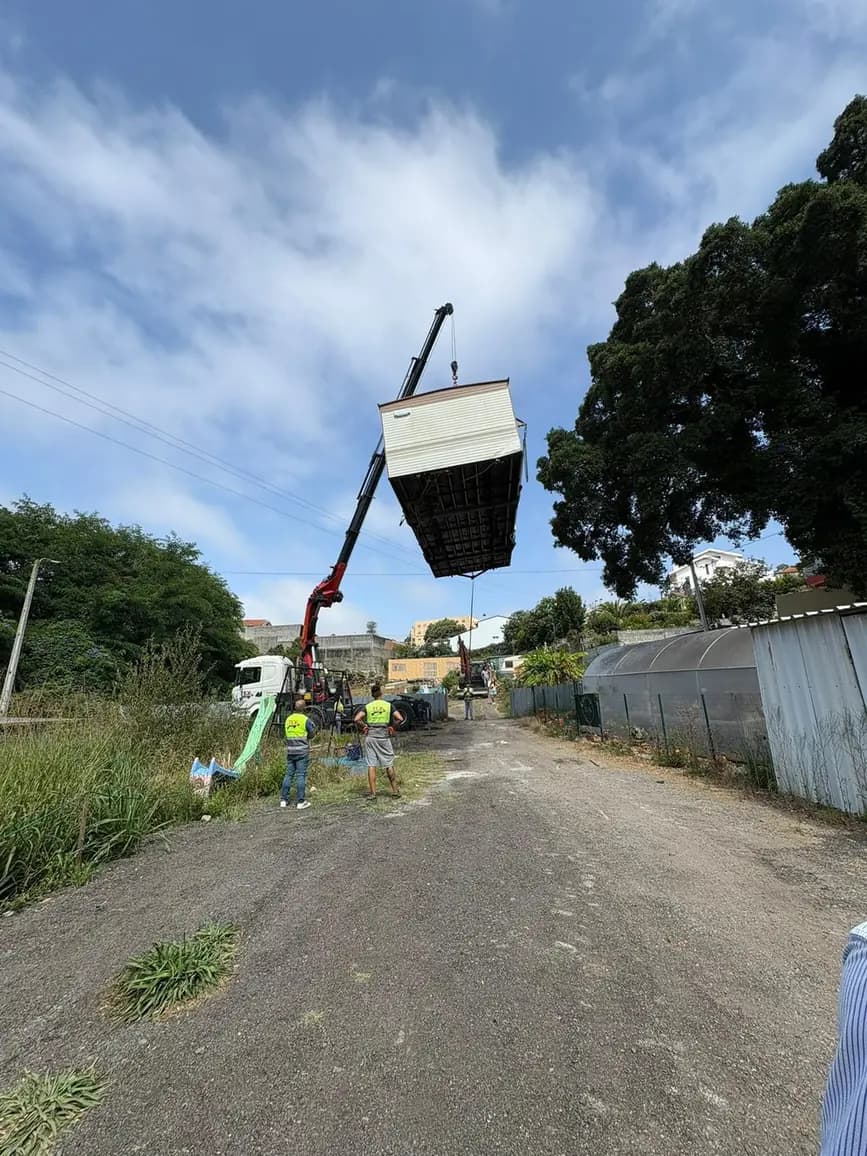
How to ship a static caravan abroad
Shipping a static caravan or lodge from the United Kingdom to another country is one move in several legs: collection at the holiday park or plot, the road leg in Great Britain, the sea crossing, customs, the road leg in the destination country and unloading on the plot. MHL organises these legs as one move, and the written quotation states what is included and what is excluded.
In Great Britain, a vehicle wider than 2.9 metres is an abnormal load, and its movement is notified to the police, highway and bridge authorities, usually through ESDAL (GOV.UK, «Abnormal loads and the ESDAL system», read on 13 November 2026). The notifications are prepared for the actual width of the home and its route.
The sea crossing uses Ro-Ro or a flat rack, compared above. In both cases the operator accepts the actual unit and its support equipment before the booking, so the quote starts from the external dimensions, the weight and photos of the chassis.
Since the United Kingdom left the European Union, a static caravan shipped from Great Britain to an EU country crosses a customs border. MHL organises export and import customs clearance with customs brokers. Import taxes (VAT and duties, where applicable) are paid separately and depend on the destination country and the unit.
In the destination country, the road leg follows that country’s own permit rules up to the plot, where the home is unloaded and set down on its supports. Levelling and water, power and sewage connections are the owner’s responsibility: arrange them locally before the delivery date.
- External length, width, total height and weight
- Photos of the chassis and the exterior
- Collection and delivery addresses, with photos of the access
- Who disconnects the services and removes the decking, steps and skirting
- Preferred collection and delivery dates
This guide explains planning considerations. The transport plan, carrier acceptance and applicable requirements need confirmation for your unit and destination before booking.
Frequently asked questions
What is the difference between Ro-Ro and flat rack?
Ro-Ro moves a suitable load over a vessel ramp on wheeled support equipment. Flat rack carries a supported and secured load on an open container platform. Both require approval of the actual unit and handling plan.
Can a twin lodge be transported assembled?
It depends on the structure, overall dimensions, weight, route and operator acceptance. Manufacturer instructions may require transport in sections.
Are helicopter or rail delivery standard options?
Do not assume availability. These requests need specialist feasibility assessment for the unit, lifting or loading system, route and destination.
What to send for a transport quotation
- Collection and delivery addresses, including access photographs.
- Length, width, total height, weight and exterior/chassis photographs.
- Number of units or twin sections and detachable extensions.
- Preferred dates, collection readiness and crane or placement needs.
Moving a static caravan in the UK ↗
Related guides
Explore transport corridors
Prepared by: Mobile Home Logistic · Content reviewed: